
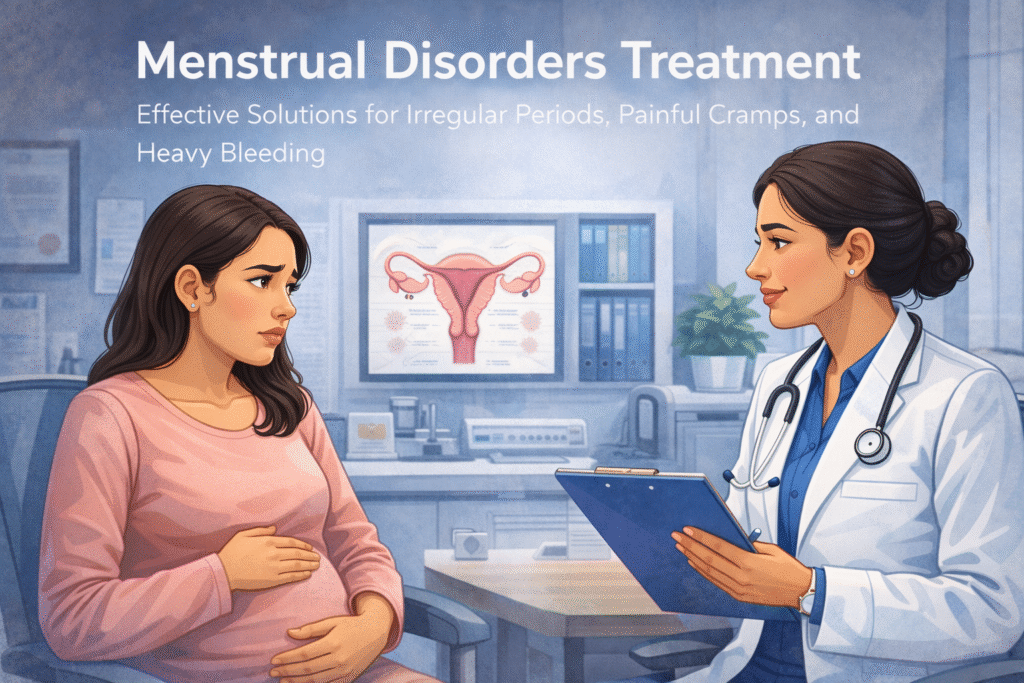
Menstrual Disorders Treatment
Understanding, Managing & Treating Menstrual Problems with Medical Guidance
What Are Menstrual Disorders?
Menstrual disorders refer to problems related to the menstrual cycle that affect a woman’s physical comfort, emotional well-being, and daily activities. These conditions are common but should not be ignored, as they may indicate hormonal imbalance or underlying gynecological issues.
Common Types of Menstrual Disorders
• Irregular periods or unpredictable menstrual cycles
• Painful periods (dysmenorrhea)
• Heavy menstrual bleeding
• Absent periods (amenorrhea)
• Premenstrual syndrome (PMS) and premenstrual dysphoric disorder (PMDD)
Causes of Menstrual Disorders
Menstrual disorders may occur due to hormonal imbalance, polycystic ovary syndrome (PCOS), thyroid disorders, stress, excessive weight gain or loss, uterine fibroids, infections, or lifestyle-related factors. Identifying the cause is essential for effective
treatment.
Diagnosis and Evaluation
Diagnosis involves medical history review, physical examination, blood tests for hormonal assessment, ultrasound imaging, and other investigations when required. Proper evaluation ensures targeted and safe treatment.
Treatment Options for Menstrual Disorders
• Lifestyle modifications including healthy diet, exercise, and stress management
• Medical treatment to regulate hormones and control bleeding
• Pain management strategies for menstrual cramps
• Treatment of underlying conditions such as thyroid disorders or PCOS
• Surgical intervention in selected cases such as fibroids or structural abnormalities
When Should You Consult a Doctor?
Medical consultation is advised if periods are excessively painful, very heavy, irregular for prolonged duration, or associated with symptoms such as fatigue, dizziness, or anemia. Early consultation helps prevent long-term complications.
A Note for Young Gynecologists
Management of menstrual disorders requires a holistic approach addressing hormonal, structural, and lifestyle factors. Clear communication and patient education are as important as medical treatment.