
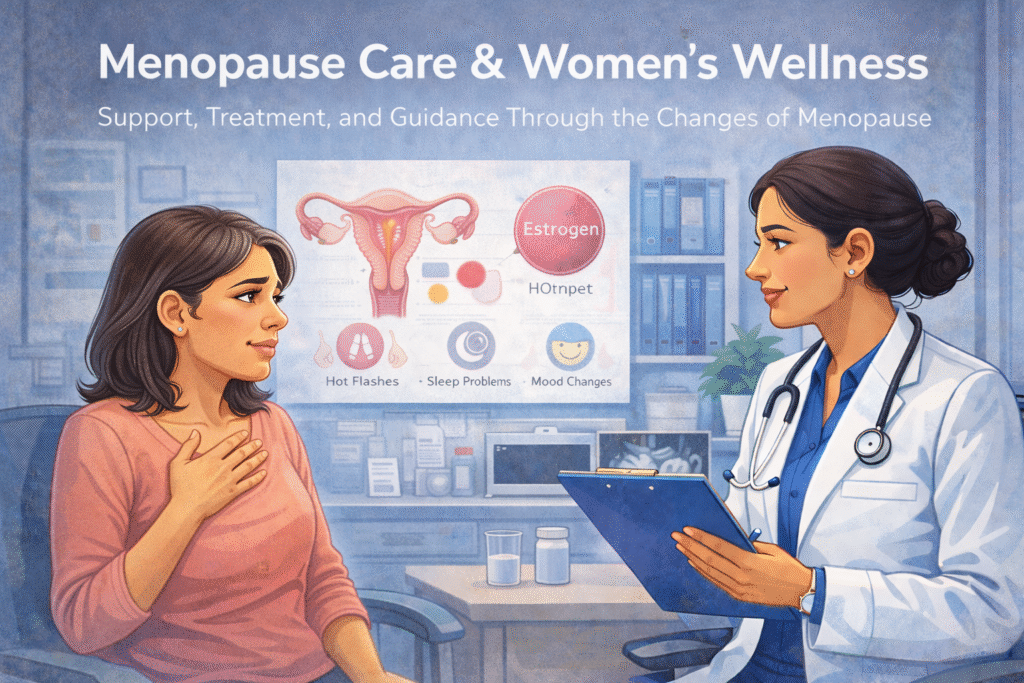
Menopause Care & Women’s Wellness
Support, Guidance & Care Through the Natural Transition of Menopause
What Is Menopause?
Menopause is a natural biological phase marking the permanent cessation of menstruation. It usually occurs between 45 and 55 years of age and is confirmed after 12 consecutive months without periods. The transition phase before menopause is known as
perimenopause, during which hormonal changes begin to occur.
Common Symptoms of Menopause
Menopausal symptoms vary in severity among women. Common symptoms include hot flashes, night sweats, sleep disturbances, mood changes, vaginal dryness, fatigue, weight changes, and gradual reduction in bone strength.
Why Menopause Care Is Important
Declining estrogen levels during menopause affect multiple body systems including bones, heart, metabolism, and emotional health. Early assessment and preventive care help reduce long-term health risks such as osteoporosis and cardiovascular disease.
Approach to Menopause Care
Menopause care is individualized and focuses on symptom relief, lifestyle modification, and long-term wellness. Management may include dietary guidance, exercise recommendations, supplements, and medical treatment when required.
Hormone Therapy – When Is It Considered?
Hormone therapy is not necessary for every woman. It may be considered in women with moderate to severe symptoms affecting quality of life, after careful evaluation of benefits and risks and informed discussion.
Women’s Wellness Beyond Menopause
Menopause is an opportunity to focus on overall health through bone density monitoring, cardiovascular risk assessment, weight management, mental well-being, and regular preventive health screenings.
When Should You Consult a Doctor?
Medical consultation is advised if menopausal symptoms significantly affect daily life, if there is unexplained bleeding after menopause, or concerns related to bone health or emotional well-being.
A Note for Young Gynecologists
Effective menopause care requires empathy, holistic evaluation, and avoidance of unnecessary medicalization. Patient education and shared decision-making are key components of ethical practice.