
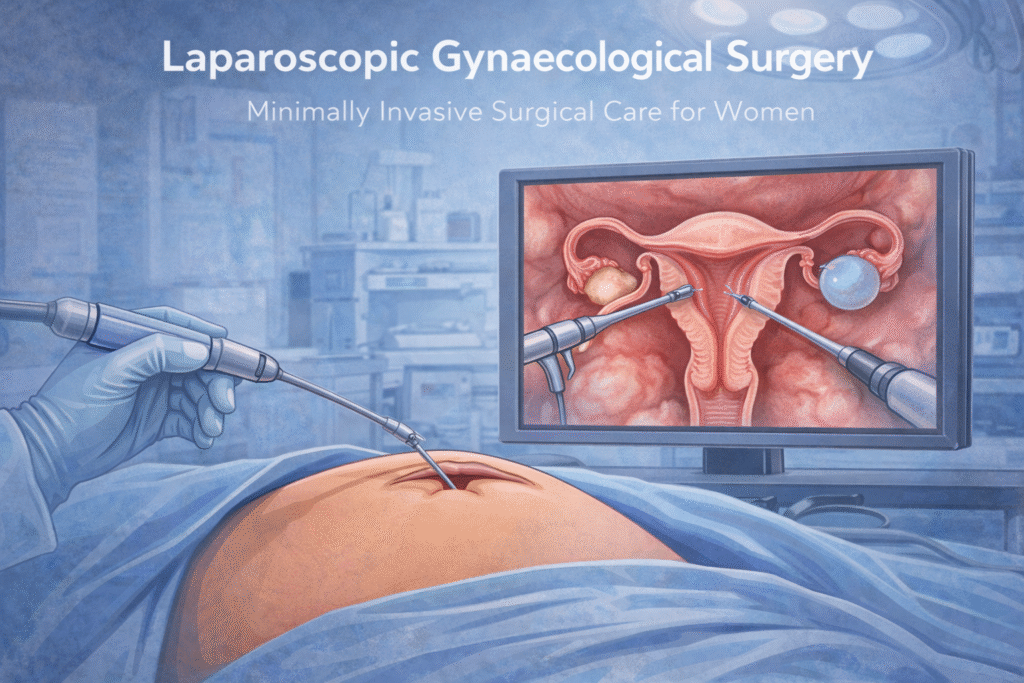
Laproscopic Gynaecological Surgery
Advanced, Minimally Invasive Surgical Care for Women
What Is Laparoscopic Gynaecological Surgery?
Laparoscopic gynaecological surgery, also known as minimally invasive surgery, is a modern surgical technique used to diagnose and treat various gynaecological conditions through small keyhole incisions instead of large cuts. A thin camera (laparoscope) and specialized instruments are used to perform surgery with high precision while minimizing trauma to surrounding tissues.
Common Conditions Treated with Laparoscopic Surgery
• Uterine fibroids
• Ovarian cysts
• Endometriosis
• Ectopic pregnancy
• Chronic pelvic pain
• Tubal block or infertility-related conditions
• Hysterectomy
• Diagnostic evaluation of unexplained infertility or pelvic pathology
Advantages of Laparoscopic Surgery
Compared to traditional open surgery, laparoscopic procedures offer several benefits including smaller incisions, minimal scarring, reduced blood loss, less postoperative pain, faster recovery, shorter hospital stay, lower infection risk, and early return to daily activities.
How Is Laparoscopic Surgery Performed?
The procedure is usually done under general anesthesia. Small incisions are made on the abdomen through which a camera and fine surgical instruments are inserted. The surgeon performs the procedure while viewing magnified images on a monitor, allowing precise and controlled surgical movements.
Safety and Recovery
Laparoscopic gynaecological surgery is safe and effective when performed by trained specialists. Most patients can resume normal activities within a few days depending on the type of surgery. Proper postoperative care and follow-up are essential for optimal recovery.
Expertise and Specialized Training
Dr. Amrita Kumari holds Fellowship (F.MAS) and Diploma (D.MAS) in Minimal Access Surgery from the World Association of Laparoscopic Surgeons. She has also completed Fellowship in Assisted Reproductive Technology from World Laparoscopy Hospital, Gurugram, and is a lifetime member of the World Association of Laparoscopic Surgeons. This advanced training ensures evidence-based, fertility-conscious, and patient-centered surgical care.
When Should You Consult a Doctor?
Medical consultation is advised if you experience persistent pelvic pain, heavy or irregular periods, recurrent ovarian cysts or fibroids, difficulty in conceiving, or conditions requiring surgical evaluation.
A Note for Young Gynecologists
Laparoscopic surgery requires structured training, sound judgment, and respect for patient safety. Appropriate case selection and ethical decision-making are essential components of good surgical practice.