
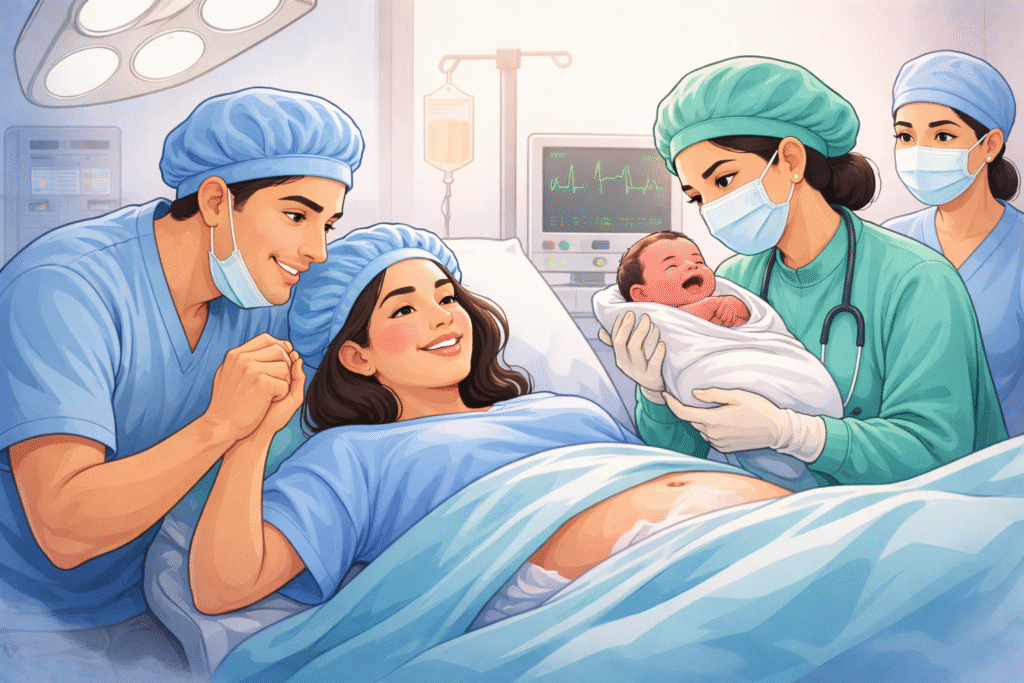
C-Section (Cesarean Delivery)
When Safety Comes First — A Thoughtful & Medically Guided C-Section
What Is a C-Section?
A C-section is a planned or emergency surgical procedure in which the baby is delivered through an incision in the mother’s abdomen and uterus. It is a medical intervention designed to protect the mother and baby when normal delivery may not be safe.
Common Reasons a C-Section May Be Needed
These include fetal distress, prolonged labor, abnormal fetal position, placenta previa, severe pregnancy-induced hypertension, uncontrolled diabetes, or previous uterine surgery with risk of rupture.
For Women Who Desired Normal Delivery
Wanting a normal delivery is natural. However, when circumstances change, flexibility saves lives. A timely C-section prevents complications and prioritizes safety over
insistence.
Planned vs Emergency C-Section
Planned C-sections are decided in advance due to known risk factors, while emergency C-sections are performed when unexpected complications arise and require immediate action.
Safety Measures During C-Section
Modern C-sections involve strict infection control, continuous monitoring, skilled surgical and anesthesia teams, and careful post-operative observation.
Recovery After C-Section
Recovery includes pain management, early mobilization, wound care, breastfeeding support, and emotional reassurance. Most women recover well with proper guidance.
Impact on Future Pregnancies
A previous C-section does not always mean repeat surgery. VBAC may be considered in selected cases based on medical evaluation.
A Note for Young Gynecologists
C-section decisions require balance — avoiding unnecessary surgery while acting decisively when risk emerges. Ethical obstetrics prioritizes outcomes over numbers.