
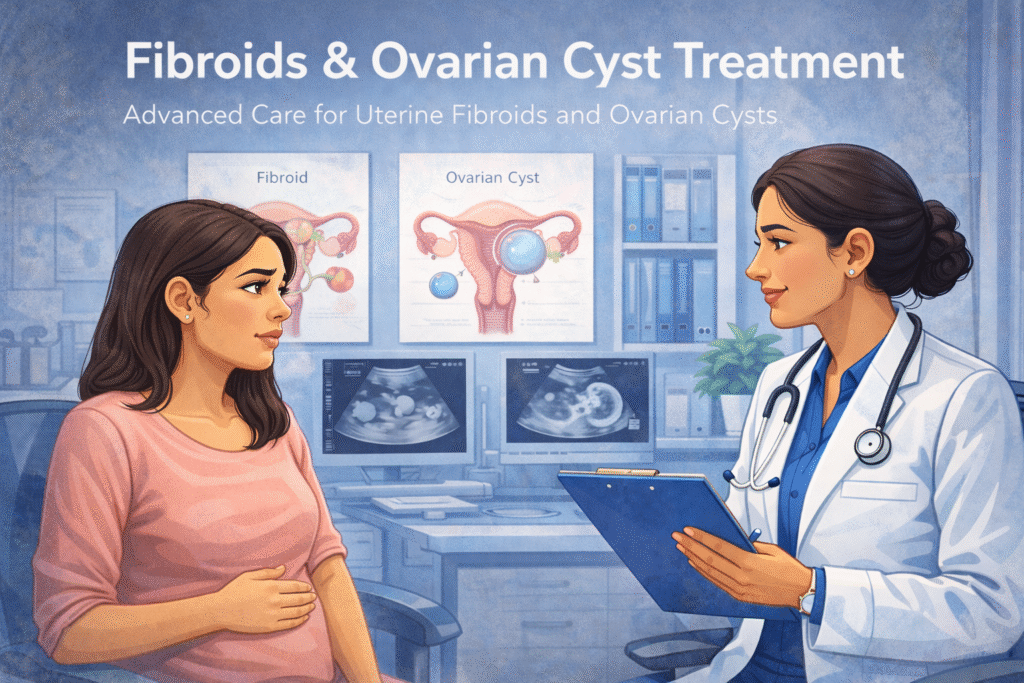
Fibroids & Ovarian Cyst Treatment
Understanding, Diagnosis & Treatment Options for Fibroids and Ovarian Cysts
What Are Uterine Fibroids and Ovarian Cysts?
Uterine fibroids and ovarian cysts are common gynecological conditions seen in women of reproductive age. Fibroids are non-cancerous growths arising from the muscular wall of the uterus, while ovarian cysts are fluid-filled sacs that develop in or on the ovaries. Most cases are benign, but proper evaluation is essential.
Common Symptoms
• Heavy or prolonged menstrual bleeding
• Pelvic pain or pressure
• Pain during periods or intercourse
• Irregular menstrual cycles
• Abdominal bloating or fullness
• Difficulty in conceiving in some cases
How Are Fibroids and Ovarian Cysts Diagnosed?
Diagnosis is usually done through pelvic examination and ultrasound imaging. In selected cases, additional tests such as blood investigations, MRI, or diagnostic laparoscopy may be required to determine the nature and extent of the condition.
Treatment Options
• Observation and regular follow-up for small, symptom-free fibroids or cysts
• Medical treatment to control symptoms such as pain or heavy bleeding
• Hormonal therapy when indicated
• Minimally invasive procedures including laparoscopic surgery
• Surgical intervention in selected cases where symptoms are severe or complications are present
Fertility and Future Pregnancy
Not all fibroids or ovarian cysts affect fertility. Treatment decisions are individualized based on symptoms, size and location of the fibroid or cyst, age, and future pregnancy plans. Preserving reproductive potential is always an important consideration.
When Should You Consult a Doctor?
Medical consultation is advised if symptoms are persistent, bleeding is excessive, pain is severe, or there is difficulty in conceiving. Early evaluation helps prevent complications and allows timely treatment.
A Note for Young Gynecologists
Management of fibroids and ovarian cysts requires careful assessment to avoid overtreatment while preventing complications. Decision-making should be patient-centered, evidence-based, and aligned with reproductive goals.