
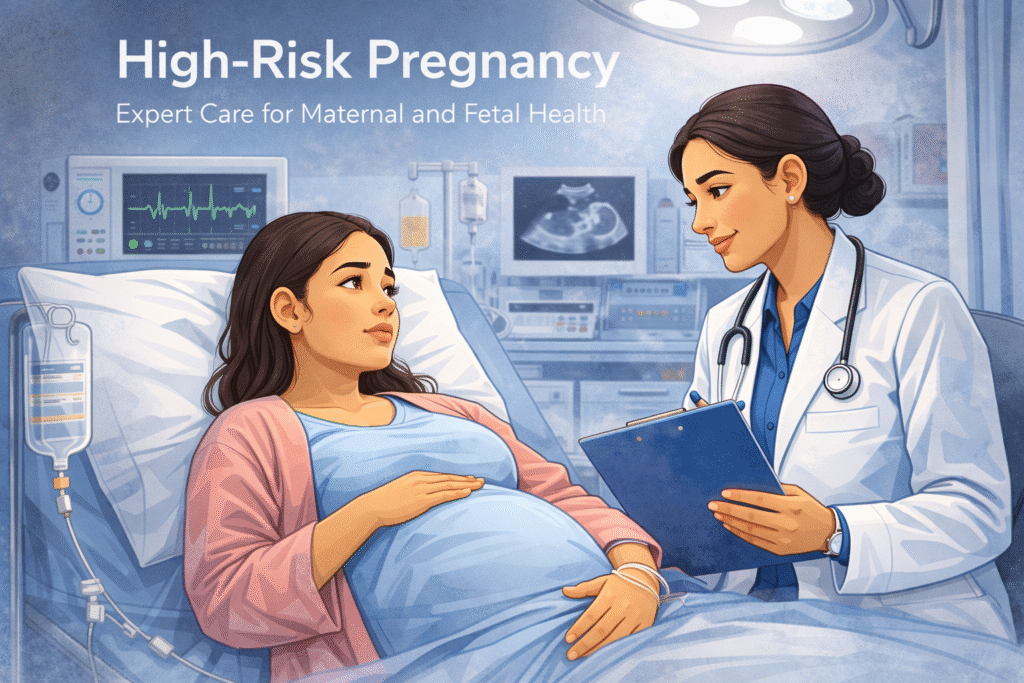
High-Risk Pregnancy
Understanding, Preventing & Managing High-Risk Pregnancy with Medical Guidance
What Is a High-Risk Pregnancy?
A high-risk pregnancy is one in which the mother, the baby, or both have an increased chance of health complications during pregnancy, labor, or after delivery. This does not mean that problems will definitely occur, but it does mean that closer medical monitoring and specialized care are required to ensure the best possible outcomes.
Common Factors That Can Make a Pregnancy High Risk
• Age-related factors: pregnancy in teenage years or after 35 years of age
• Weight-related factors: underweight or overweight/obesity
• Pre-existing medical conditions such as high blood pressure, diabetes, thyroid disorders, epilepsy, heart disease, or autoimmune conditions
• History of multiple miscarriages or previous intrauterine fetal death (IUFD/IUD)
• Previous cesarean section or uterine surgery
• Multiple pregnancy (twins or higher-order pregnancies)
• Abnormal position of the baby (breech or transverse lie)
• Preterm labor or labor pains occurring before the expected time
• Absence of labor pains even after the expected due date
• Abnormal growth of the fetus (restricted or excessive growth)
• Low or excessive amniotic fluid
• Placental problems such as placenta previa or placental abruption
Why Close Monitoring Is Important
High-risk pregnancies require more frequent antenatal visits, regular investigations, and timely medical decisions. Early detection of complications helps prevent serious outcomes and improves safety for both mother and baby.
How to Reduce the Risk of High-Risk Pregnancy
• Plan pregnancy at an appropriate age
• Maintain a healthy weight through balanced diet and regular exercise
• Seek pre-conception counseling before planning pregnancy
• Control medical conditions like diabetes, high blood pressure, thyroid disorders, or epilepsy before conception
• Start prenatal vitamins such as folic acid on time
• Avoid smoking, alcohol, and substance use
• Manage stress and ensure adequate rest
• Attend regular antenatal checkups
• Take medications exactly as prescribed
• Report warning signs such as bleeding, severe headache, swelling, or reduced fetal movements immediately
Emotional and Psychological Support
Being diagnosed with a high-risk pregnancy can be emotionally challenging. Counseling, reassurance, and family support are essential. With appropriate care, many women with high-risk pregnancies go on to have healthy deliveries.
A Note for Young Obstetricians
High-risk pregnancy management requires vigilance, anticipation of complications, multidisciplinary care, and effective communication. The goal is always to minimize risk while respecting maternal physiology and informed decision-making.