
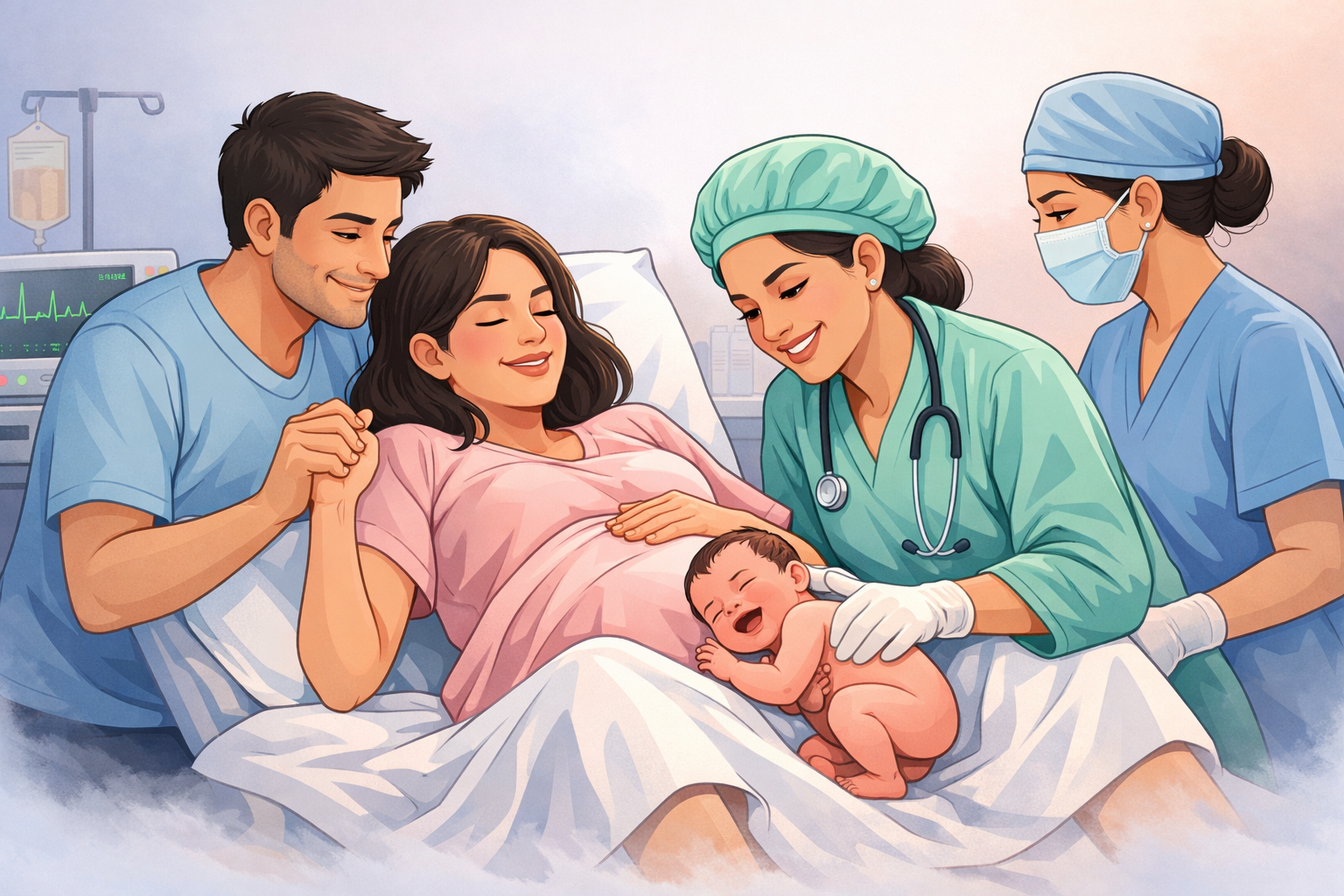
Normal Delivery (Vaginal Birth)
Safe, Natural & Medically Guided Normal Delivery
Normal delivery, also known as vaginal birth, is the natural way a baby is born and is often the safest option when pregnancy progresses normally. With proper monitoring, timely decisions, and experienced obstetric care, normal delivery can be a positive and empowering experience for the mother.
What Is Normal Delivery?
Normal delivery refers to the birth of a baby through the vaginal route without surgical intervention. It is usually possible when pregnancy is full term, the baby position is favorable, and both mother and baby remain stable during labor.
Benefits of Normal Delivery
When medically appropriate, normal delivery offers faster recovery, lower surgical risk, early mother-baby bonding, shorter hospital stay, and reduced future pregnancy risks.
Preparation for a Safe Normal Delivery
Successful normal delivery requires regular antenatal checkups, monitoring of vital parameters, early risk identification, labor education, and emotional support.
When Normal Delivery May NOT Be Safe
Normal delivery should never be forced. Conditions such as fetal distress, placenta previa, severe hypertension, uncontrolled diabetes, abnormal fetal position, or previous high-risk uterine surgery may require timely surgical intervention.
The Role of the Doctor
A safe normal delivery depends on continuous assessment, early detection of complications, and timely clinical decision-making.
A Note for Young Obstetricians
Normal delivery is both an art and a science. Ethical obstetric practice prioritizes maternal and fetal safety over delivery mode statistics.