
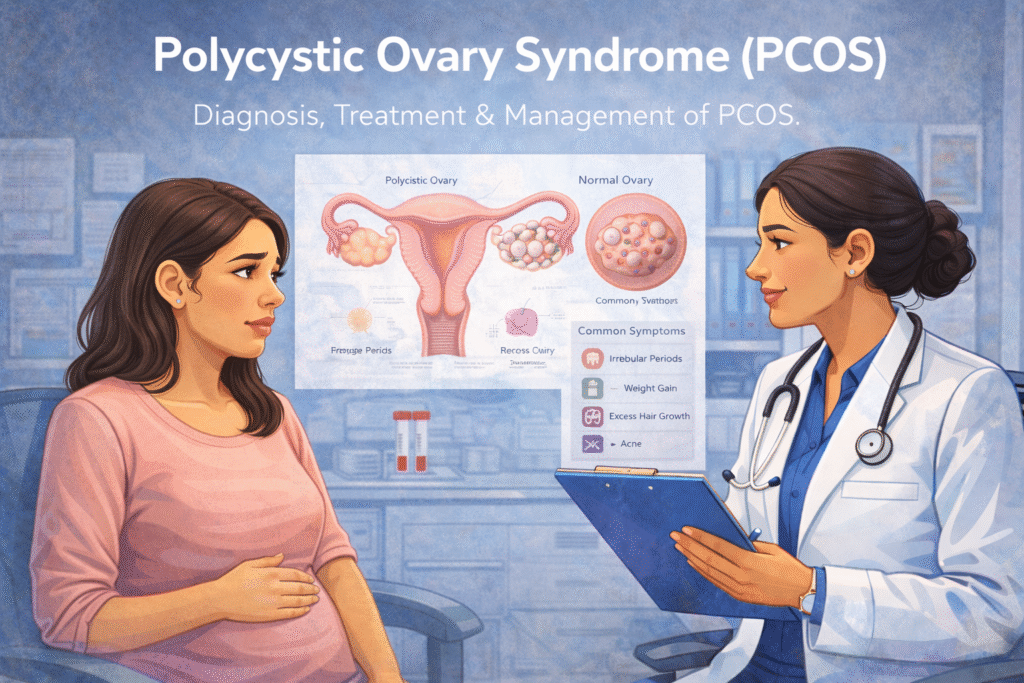
Polycystic Ovary Syndrome (PCOS)
Understanding, Diagnosis & Long-Term Management of PCOS
What Is PCOS?
Polycystic Ovary Syndrome (PCOS) is a common hormonal disorder affecting women of reproductive age. In PCOS, hormonal imbalance affects:
- Monthly periods
- Ovulation (egg release)
- Weight and metabolism
- Skin and hair health
Because of this, periods may become irregular and other symptoms may appear. PCOS is a long-term condition, but with proper care, most women can lead a healthy and normal life.
Common Symptoms of PCOS
• Irregular or absent menstrual periods
• Difficulty in ovulation
• Excess facial or body hair (hirsutism)
• Acne or oily skin
• Weight gain or difficulty losing weight
• Thinning of scalp hair
• Fertility-related concerns in some women
Why PCOS Requires Medical Attention
If PCOS is ignored for a long time, it may increase the risk of:
- Difficulty in pregnancy
- Diabetes
- High blood pressure
- Cholesterol problems
- Thickening of uterus lining
- Excessive bleeding
- Obesity
Early diagnosis and regular follow-up help prevent these problems.
Diagnosis and Evaluation
There is no single test for PCOS. Diagnosis is based on:
- Medical history and symptoms
- Physical examination
- Ultrasound of ovaries
- Hormonal blood tests
- Blood sugar and lipid profile
A complete evaluation helps in planning proper treatment.
Management and Treatment of PCOS
PCOS treatment is different for every woman. It depends on age, symptoms, and future pregnancy plans.
1️⃣ Lifestyle Modification (Most Important)
Healthy lifestyle is the foundation of PCOS control.
- Balanced diet
- Reduce junk food and sugary drinks
- Increase fruits, vegetables, and proteins
- Regular walking, yoga, or exercise
- Maintain healthy weight
- Proper sleep
- Stress management
Even 5–10% weight loss can improve symptoms.
2️⃣ Medical Treatment (When Required)
Depending on symptoms, medicines may be given to:
- Regulate periods
- Improve ovulation
- Control acne and hair growth
- Improve insulin resistance
- Maintain hormonal balance
All medicines should be taken only under doctor’s guidance.
PCOS and Fertility
Many women with PCOS worry about pregnancy.
The good news is:
✔ Most women with PCOS can conceive
✔ Many get pregnant naturally
✔ Others may need medical support
Early evaluation and proper guidance help in timely planning.
Emotional and Mental Health in PCOS
PCOS can affect self-confidence due to weight gain, acne, hair growth, or delayed pregnancy.
Some women may feel:
- Stress
- Anxiety
- Low mood
- Body image issues
Emotional support and proper counselling are an important part of PCOS care.
When Should You Consult a Doctor?
You should consult if:
- Periods are irregular or absent
- Excess acne or hair growth is increasing
- Weight gain is uncontrolled
- Planning pregnancy but facing difficulty
- Heavy or prolonged bleeding
- Symptoms are affecting daily life
Early consultation gives better long-term results.
A Gentle Message for Young Women
PCOS is not a disease to fear.
With:
✔ Proper guidance
✔ Healthy lifestyle
✔ Regular follow-up
✔ Positive mindset
You can live a normal, confident, and healthy life.
Why Choose Dr. Amrita Kumari for PCOS Care?
Dr. Amrita Kumari believes in:
- Personalized treatment
- Avoiding unnecessary medicines
- Focus on long-term health
- Patient education
- Gentle and supportive care
Every woman’s PCOS journey is different — and deserves individual attention.
A Note for Young Gynecologists
PCOS management requires patience, continuity of care, and avoidance of overtreatment. Addressing metabolic health and patient education is as important as menstrual regulation.